For years, cable internet has been one of the most popular ways for American households to get online. Providers such as Xfinity and Spectrum have served millions of customers with high-speed broadband connections.
But things are changing.
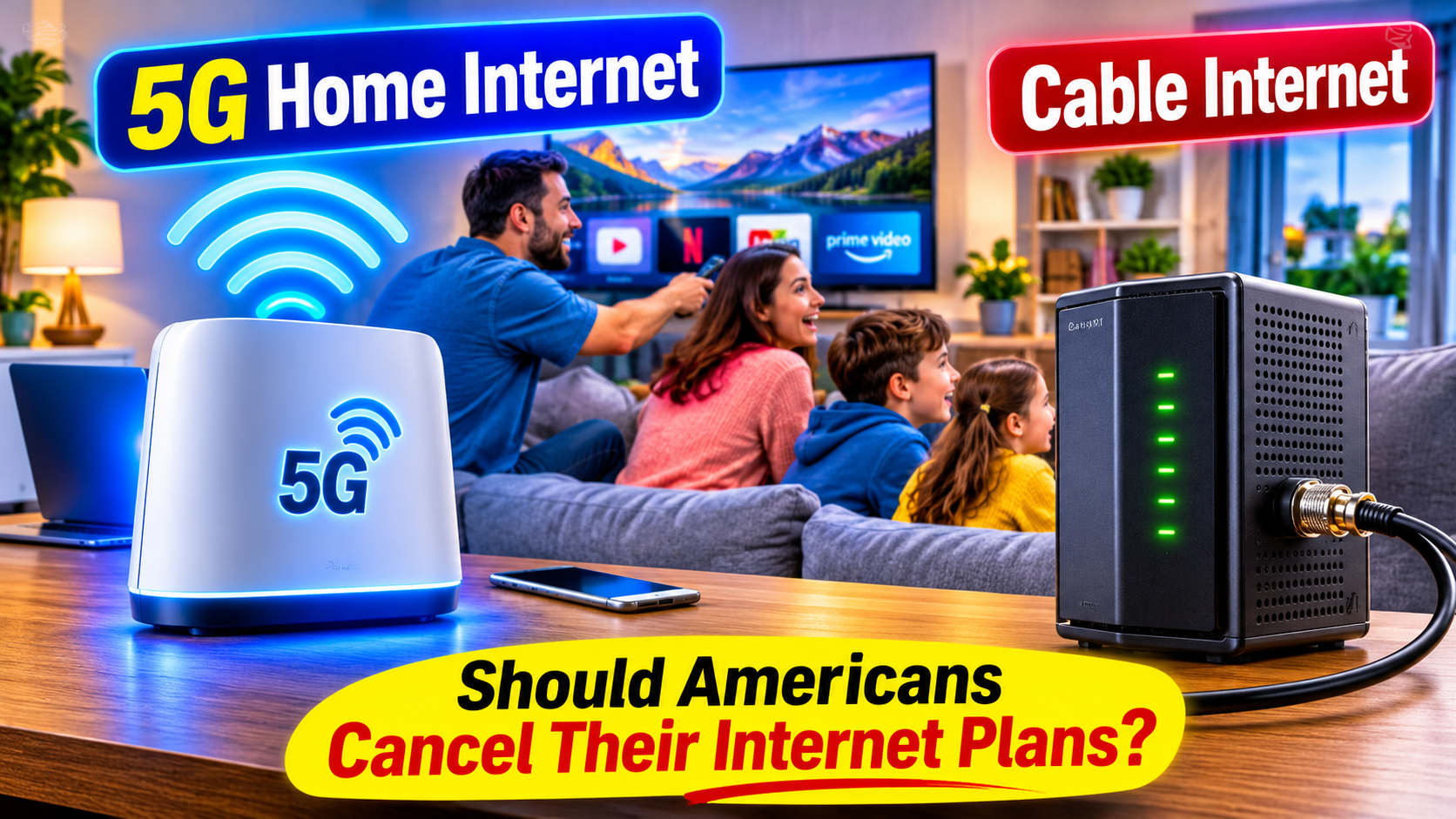
5G home internet is giving Americans another option. Instead of relying on traditional cable connections, customers can connect a wireless gateway to a nearby cellular network and get internet access throughout their homes.
Companies such as T-Mobile and Verizon are competing directly with traditional broadband providers, attracting customers with simple installation, wireless connectivity and competitive pricing.
But does that mean Americans should cancel their cable internet subscriptions?
Not necessarily. While 5G home internet can be an excellent alternative for many households, cable still has advantages in certain situations. Let’s compare both technologies and find out which one makes more sense in 2026.
Why 5G home internet is becoming a serious competitor
The biggest reason behind the growth of 5G home internet is convenience.
Traditional cable internet requires a wired connection to the home. In contrast, fixed wireless internet uses cellular networks to deliver broadband through a home gateway.
This makes installation easier and gives consumers another choice when they are unhappy with their existing provider.
According to a November 2026 report by The Washington Post, 5G home internet serves more than 18 million US households, representing approximately 13% of American households.
That growth is putting pressure on cable internet companies to compete on pricing, speed and customer experience.
What makes 5G home internet attractive?
- Easy installation: Most customers can set up a gateway without waiting for a technician.
- Competitive pricing: Some plans cost less than traditional broadband subscriptions.
- Unlimited data options: Major providers advertise plans with unlimited data.
- No long-term contracts: Many plans allow customers to cancel without an annual commitment.
- More choices: Consumers can compare wireless and wired broadband instead of relying on a single provider.
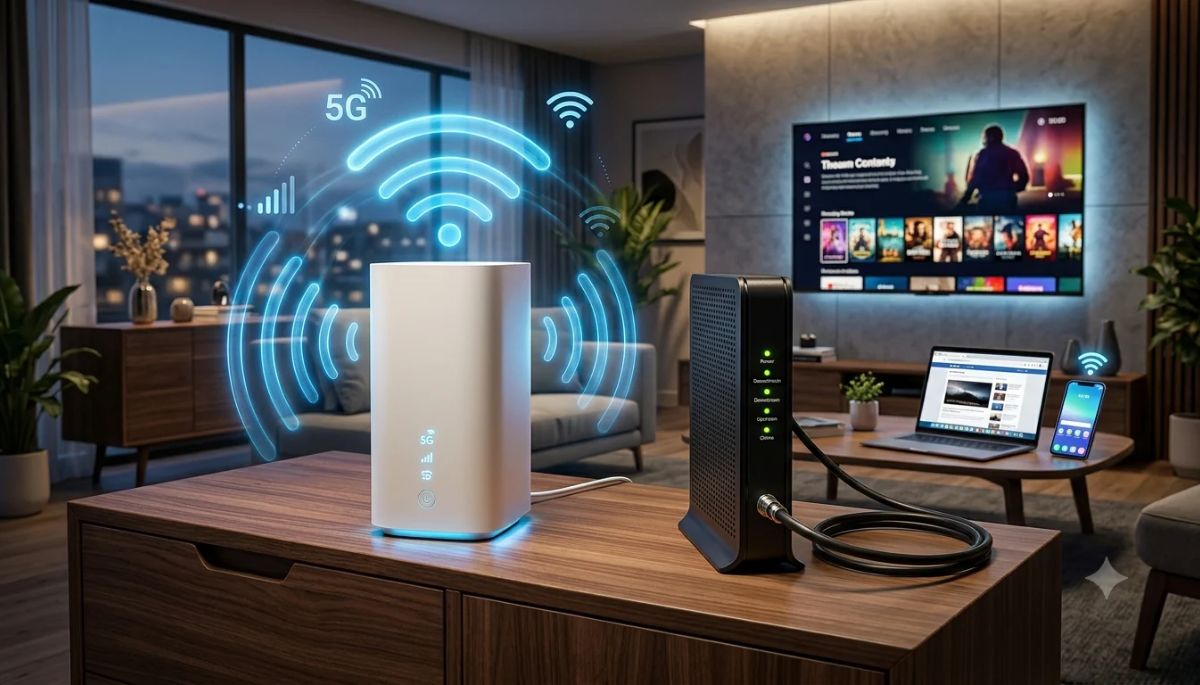
5G home internet vs cable: What’s the difference?
The two technologies provide the same basic service, but they work differently.
| Feature | 5G Home Internet | Cable Internet |
|---|---|---|
| Technology | Cellular wireless | Coaxial cable |
| Installation | Usually DIY | Wired installation |
| Download speed | Often 100–500 Mbps | 100 Mbps to 1 Gbps or more |
| Upload speed | Usually lower | Varies by network |
| Data limits | Often unlimited | Depends on provider and plan |
| Reliability | Depends on signal and congestion | Generally more consistent |
| Gaming | Good in suitable locations | Often better latency |
| Availability | Depends on 5G coverage | Depends on cable network |
Actual speeds and availability depend on the address, network conditions and selected plan.
Which technology is faster?
There is no universal winner.
T-Mobile’s published broadband label lists typical 5G download speeds of 170–498 Mbps and upload speeds of 12–55 Mbps. These figures show that modern 5G home internet can deliver speeds suitable for many households.
Cable internet can offer higher speed tiers, especially for households that need gigabit connections and large downloads.
However, a 500 Mbps cable plan may not be necessary for someone who mainly watches Netflix, browses websites and attends video calls.
Best 5G home internet providers in the USA (2026)
Three major wireless providers are competing in the US home internet market.
1. T-Mobile 5G Home Internet
(Strong option for speed)
- Advertised plan pricing starts at $50/month with AutoPay.
- As low as $35/month with an eligible voice line.
- Unlimited data and no annual contract.
- Typical download speeds: 170–498 Mbps.
Pricing and speeds are subject to eligibility and location.
2. Verizon 5G Home Internet
- Starting price: $60/month.
- As low as $35/month with eligible mobile service and AutoPay.
- Unlimited data.
- Router included.
- Three-year price guarantee on the basic plan.
Promotional pricing and availability restrictions apply.
3. AT&T Internet Air
- Wireless home broadband service.
- No traditional cable installation.
- Availability depends on the local AT&T network.
- Worth comparing with T-Mobile and Verizon where offered.
Cable internet is not giving up without a fight
Cable providers still have an important advantage: established wired broadband infrastructure.
Companies such as Xfinity and Spectrum continue to offer competitive internet plans, including high-speed options for households that need more bandwidth.
For example, Spectrum’s listed introductory prices include:
| Spectrum plan | Advertised price |
|---|---|
| Internet 100 | $30/month |
| Internet 500 | $40/month |
| Internet 1 Gig | $60/month |
| Internet 2 Gig | $80/month |
These are first-year prices and availability varies by market. Spectrum advertises no data caps or annual contracts on these plans.
This means cable internet is not necessarily more expensive than 5G.
Consumers should compare the regular monthly price, promotional period, equipment charges and mobile bundle requirements before switching.
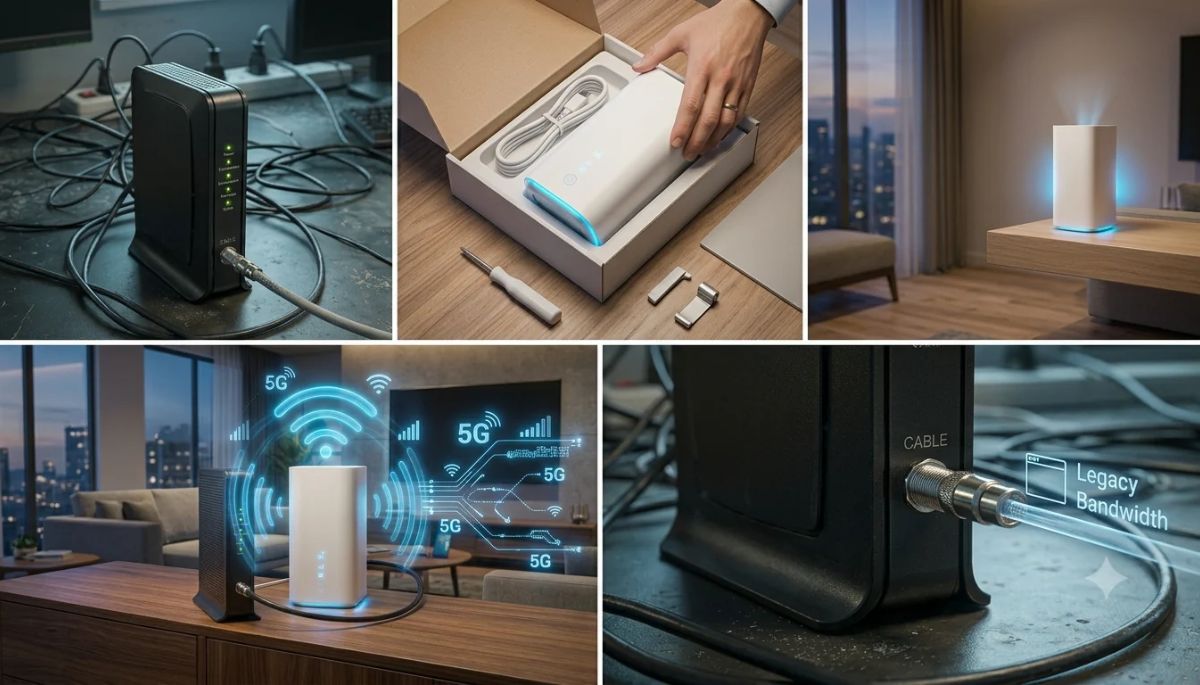
5G vs cable: Which is better for different users?
The right internet connection depends on how your household uses the internet.
| User type | Better option | Why |
|---|---|---|
| Casual browsing | 5G | Convenient and often affordable |
| Netflix and streaming | Both | Both can support HD and 4K streaming |
| Online gaming | Cable | Usually more predictable latency |
| Work from home | Cable | More consistent connection |
| Large downloads | Cable | Higher speed tiers available |
| Budget-conscious families | 5G or cable | Compare local offers |
| Homes without cable | 5G | A useful alternative |
Who should switch to 5G home internet?
5G home internet may be a good choice if:
- Your current cable bill is becoming too expensive.
- You mainly browse, stream and use social media.
- Your address has strong 5G coverage.
- You want a simple installation process.
- You don’t need extremely high upload speeds.
Who should keep cable internet?
You may want to keep your cable connection if:
- Several family members work or study online simultaneously.
- You regularly download large files.
- You are a competitive online gamer.
- You need consistent upload performance.
- Your cable provider offers a good gigabit deal.
Is 5G home internet reliable enough for everyday use?
Yes, it can be reliable enough for everyday activities, but performance depends heavily on local conditions.
Unlike a wired cable connection, 5G home internet depends on the wireless signal between your gateway and a nearby cellular tower.
Things such as network congestion, building materials, gateway placement and distance from the tower can affect performance.
For the best results, customers should:
- Place the gateway near a window.
- Check signal strength before finalizing installation.
- Run speed tests during morning and evening hours.
- Test video calls and streaming on multiple devices.
- Check the provider’s network management policy.
One important tip: Don’t judge a 5G connection using a single speed test. Test it at different times of the day.
Should Americans cancel their cable internet plans?
The answer is: Not everyone should cancel cable, but 5G home internet is now a serious alternative worth considering.
Before cancelling your existing subscription, check these five things:
- Availability: Confirm that T-Mobile, Verizon or AT&T offers 5G home internet at your exact address.
- Actual speed: Compare real-world download and upload speeds, not just advertised maximum speeds.
- Monthly cost: Check the price after promotional discounts expire.
- Network performance: Test the connection during busy evening hours.
- Cancellation fees: Check whether your current provider charges any early termination or equipment return fees.
If 5G delivers sufficient speed and reliability at a lower total cost, switching could make financial sense.
However, if your cable connection is already fast, reliable and reasonably priced, there may be little reason to change.
Frequently Asked Questions (FAQs)
1. Is 5G home internet better than cable?
It depends on your location and internet usage. 5G can offer easier installation and competitive pricing, while cable generally provides more consistent performance.
2. Is T-Mobile 5G home internet fast enough for Netflix?
Yes. T-Mobile’s advertised typical download speeds are suitable for HD and 4K streaming, provided the connection performs well at your address.
3. Can 5G home internet replace Xfinity?
Yes. In areas with good 5G coverage, it can replace Xfinity for everyday browsing, streaming and video calls.
4. Is Verizon 5G home internet unlimited?
Verizon advertises unlimited data on its 5G Home plans, subject to applicable service terms and usage policies.
5. Does 5G home internet work during bad weather?
It can continue working during many weather conditions, but severe weather and environmental factors may affect wireless signal quality.
6. Which is cheaper: 5G or cable internet?
Neither is always cheaper. T-Mobile and Verizon offer discounted wireless plans, while Spectrum and other cable providers also have competitive introductory offers.
7. Is 5G home internet good for gaming?
It can work for casual gaming, but cable and fiber are generally better choices for competitive gaming because of their more predictable latency.
Final Verdict: Is It Time to Switch?
The competition between 5G home internet and cable broadband is becoming increasingly important for American consumers.
T-Mobile, Verizon and AT&T are giving households more choices, while traditional providers such as Xfinity and Spectrum are competing with attractive broadband offers.
For people looking to reduce their monthly internet bills, 5G home internet is worth testing.
But don’t cancel your cable subscription just because a wireless provider advertises a cheaper plan. Check coverage, test actual performance and compare the full monthly cost first.
Read More:- Best 1 Gig Internet Plans in the USA 2026